
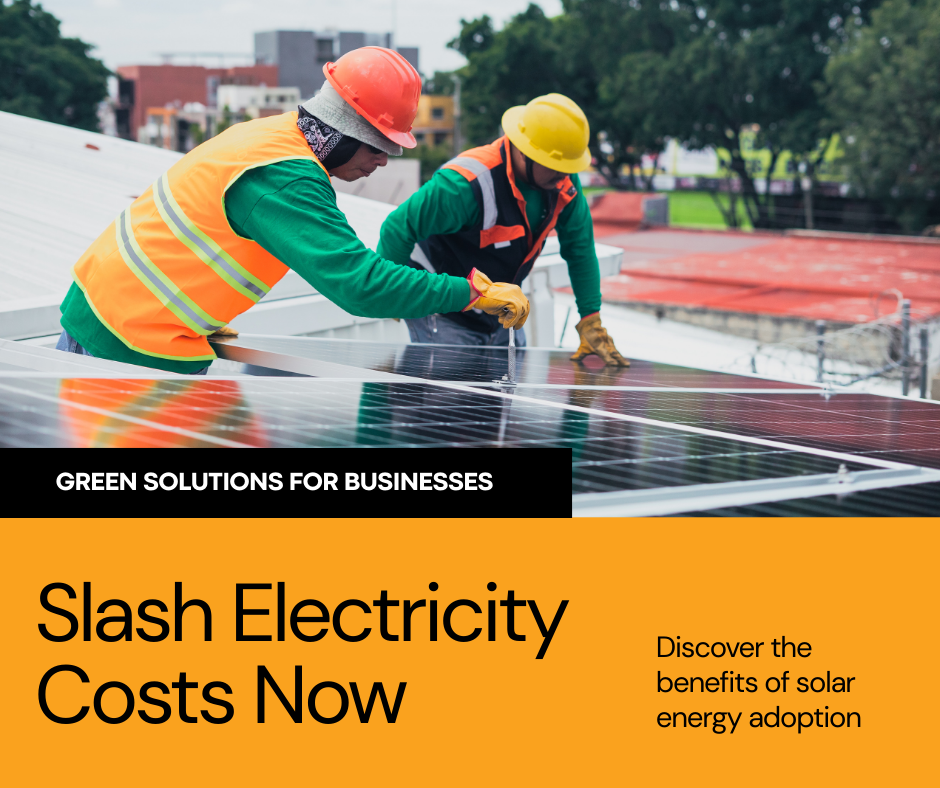
Rising electricity bills are hurting businesses. Every month, energy costs eat into profits. Solar energy changes this equation. Businesses can slash electricity costs with solar and enjoy steady, long-term savings. Adopting solar is easier than ever. Costs are dropping and efficiency is improving. Businesses can break free from unpredictable tariff hikes. They can invest their savings into growth. Solar also enhances brand image with visible sustainability efforts. Government schemes and tax benefits add extra advantages. Businesses that switch today gain an edge tomorrow.
Electricity costs keep going up every year. Many companies now look for ways to reduce electricity costs with solar. Solar panels generate electricity by converting sunlight into energy through photovoltaic cells. The direct current (DC) generated is then converted into usable alternating current (AC) by an inverter. Power generated by solar panels reduces dependence on the grid. Sunlight is free, so it helps businesses save money on electricity with solar panels.
Solar PV modules produce electricity at ₹2.5-3.5 per kWh. Even with battery backup, the power prices go up to ₹4.7 per kWh. These prices are lower than the average industrial electricity rate of ₹7.9 per kWh.
Instead of setting up captive solar plants, businesses can rely on open-access solar projects. In this model, industrial and commercial consumers can directly buy solar power from producers. Using open-access solar power, businesses can reduce energy costs by 30%.
Another way to utilise solar energy for power generation is rooftop solar systems. Large IT parks are installing solar panels on rooftops and parking areas, leading to a significant reduction in electricity expenses for operations.
Advantages of using solar systems:
Many utilities charge more during peak hours. Electricity from the grid can be replaced by solar power to run operations at such times. This avoids high rates and reduces energy costs.
Industries in regions with unstable electricity supply frequently turn to diesel generators, a costly backup option. Solar plants offer a reliable alternative, reducing or eliminating generator use and lowering fuel expenses considerably.
Solar power helps you depend less on the grid. You can avoid downtime during outages or shortages. This keeps production going without costly delays and missing deadlines.
In states where net metering is allowed, you can sell extra solar power generated by your solar power plant back to the grid. You earn credits that help cut power bills with solar. You save costs by relying less on electricity from the grid.
Tax deductions are available under the Income Tax Act towards investments made in solar power systems. Businesses can claim 80% accelerated depreciation on solar equipment in the first year of installation. This lowers taxes,makes solar more attractive by lowering the initial investment burden.
Under certain conditions, solar panel installations are eligible for reduced GST rates. Additionally, there are regional incentives depending on state policies. Businesses benefit from reduced initial installation costs and shortened payback periods.Thus, reducing energy costs is easier.
If you make surplus solar power, you can earn RECs. You can sell these RECs in the market to other businesses not meeting their renewable energy obligations. This is added income while you save money on electricity with solar panels.
You invest once in setting up the solar system. Solar systems last 25–30 years. After setup, maintenance costs are low and savings are high. Most businesses recover costs in 6-7 years. After that, electricity is almost free.
India is witnessing a consistent increase in energy costs. Fuel prices are rising, power demand is high, and policy changes are hiking the prices. Solar locks your cost for many years and acts as a hedge against high energy costs. You can plan budgets better and reduce energy costs.
The value of commercial properties with installed solar systems increases. Tenants or clients find properties with renewable energy systems attractive, especially as sustainability becomes crucial for businesses.
Follow steps below to get the best results from your solar systems:
Based on the advantages of solar power, many companies are adopting this renewable energy for electricity generation.
| Company / Institution | Solar Model | Capacity / Supply | Example Sites / Coverage |
|---|---|---|---|
| Delhi Metro Rail Corp (DMRC) | Open Access (Rewa Solar Park PPA) | 99 MW | Powers NCR Metro Ops |
| Bengaluru Airport (BIAL) | Open Access + Onsite | 45.9 MW wind-solar hybrid (~90 GWh/yr) + ~6.9 MW onsite | Airport ops, cargo, E&M, car parks |
| Tata Motors | Group Captive + Rooftop | 131 MW offsite (MH & GJ) + 20.73 MWp rooftop Pune | 6 plants, CVBU Pune |
| Hindustan Unilever (HUL) | Open Access + Rooftop | 45 MW offsite Rajasthan + ~30 MW rooftop | 32 sites across 15 states |
| Saint-Gobain India | Open Access Hybrid + Rooftop | ~189 GWh/yr offsite hybrid + rooftop | 6 sites across TN & AP |
| ITC Ltd. | Captive / Open Access + Onsite | 205 MW RE portfolio (mix) + 9.45 MW Karnataka solar | Hotels, factories, paperboards, and FMCG sites |
| Infosys | Rooftop + Onsite | 60.2 MW total (6.6–7.2 MW Hyderabad campus) | Corporate campuses across India |
| JK Cement | Open Access / Group Captive | 10 MWp offsite (Uttar Pradesh); 6.42 MW wind-solar PPA (Karnataka) | Aligarh Unit; 25-yr PPA in Karnataka |
| JSW Group (Energy/Mines) | Group Captive & Rooftop | 225 MW Vijayanagar Solar; plus rooftop/ground systems totalling ~12.23 MW | Supplies JSW Steel; multiple state installations |
Solar power is now affordable and reliable. It helps businesses reduce electricity costs with solar, lower taxes, and earn extra income. With rising power rates, switching to solar is a smart, future-proof choice. Solar energy is an attractive option for businesses to reduce operating costs, enhance sustainability, and invest in sustainable energy solutions. The time to act is now.
Solar panels generate electricity from sunlight, lowering the power purchased from the grid. This helps businesses reduce electricity costs with solar and improve cash flow.
Yes, in some cases. By combining solar panels with net metering, subsidies, and energy-efficient appliances, companies can even reduce power bills to nearly zero.
Businesses can claim the tax benefit of 80% accelerated depreciation, capital subsidies up to 40%, lower GST rates, and earn Renewable Energy Certificates. These incentives make solar systems more affordable.
Yes. With storage or hybrid systems, solar can supply backup power, reducing downtime and losses.
Some key hurdles include the high initial investment, large space requirements for setup, intermittent power generation, and the need for careful planning to integrate with existing energy systems.
